Hong Kong Mahjong
Scoring & FAAN
A winning shape is only the start. Explore a few easy scoring patterns and bonuses to learn how faan works.
A simple sample for learning. This page shows only a sample of easy scoring rules based on Hong Kong Mahjong to explain the concept of the game. It is not a complete scoring guide. The separate Limit Hands section introduces a special scoring concept. Actual rules and faan values may vary.
How to count faan
Faan measures the scoring value of a winning hand. Check the hand’s shape, its tiles, how you won, and any flowers or seasons. Add the applicable awards, taking care with bonuses that include or replace others.
Agree on a minimum. A completed hand must meet your table’s minimum faan to win. Set that minimum before playing, along with the payment table. The values below describe this example ruleset; payment amounts depend on your table’s agreement.
An example total
Suppose your winning hand qualifies for All Triplets, and you draw the winning tile yourself:
- All Triplets
- 3 faan
- Self-Pick
- 1 faan
- Subtotal
- 4 faan
Then check for any qualifying dragon sets, seat or round winds, and flower or season awards.
Read the descriptions before adding. Mixed Terminals already includes All Triplets. Awards marked “per set” or “per tile” may count more than once.
Set Types
| Condition | Faan | When it counts |
|---|---|---|
| All Sequences | 1 | Four chows + a pair. |
| All Triplets | 3 | Four pungs/kongs + a pair; no chows. |
Win Actions
| Condition | Faan | When it counts |
|---|---|---|
| Self-Pick | 1 | Draw the tile that completes your hand. |
| Moon Under the Sea | 1 | Win on the last wall tile or the last discard. |
Special Tiles
A pung (also called a pong) is three identical tiles; a kong is four. Honours are winds and dragons, and terminals are suited 1s and 9s.
| Condition | Faan | When it counts |
|---|---|---|
| Dragon Set | 1 | 1 per dragon pung/kong: Red, Green or White. (per set) |
| Seat / Round Wind | 1 | 1 per qualifying pung/kong; 2 if both winds match. (per set) |
| Mixed Flush | 3 | One numbered suit only plus honors. |
| Mixed Terminals | 4 | Only 1s, 9s and honors. Includes All Triplets. |
Flowers & Seasons
Keep bonus tiles separate from your melds and pair. Seat numbers are East 1, South 2, West 3, North 4; use the same number for both your flower and your season.
| Condition | Faan | When it counts |
|---|---|---|
| No Flowers / Seasons | 1 | No bonus tiles drawn during this hand. |
| Seat Flower / Season | 1 | 1 per bonus tile matching your seat number. (per tile) |
Limit Hands
A limit hand is a special winning hand awarded the maximum score allowed by the table’s rules. In this example ruleset, that is 13 faan. Use the limit score instead of adding the ordinary faan awards; extra bonuses do not increase it beyond the maximum.
Which hands qualify and how much the limit pays depend on your house rules. Agree on these before playing.
Example: Thirteen Orphans
Collect one of each of the 13 different terminals and honours, then add a second copy of any one of them to make a pair:
- The 1 and 9 of each suit: Dots, Bamboo, and Characters (6 tiles).
- All four winds: East, South, West, and North (4 tiles).
- All three dragons: Red, Green, and White (3 tiles).
- One duplicate of any of these 13 tiles (1 extra tile).
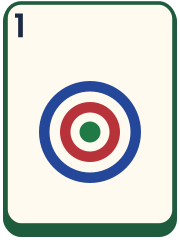
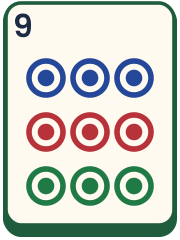
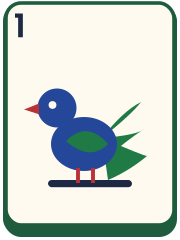
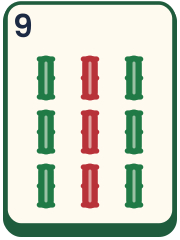
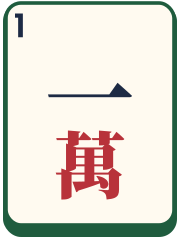
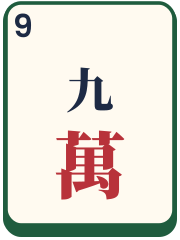
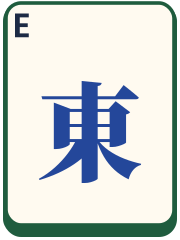
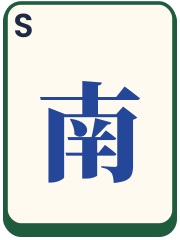
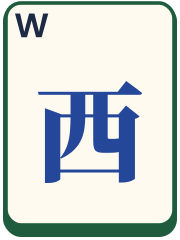
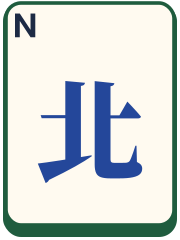
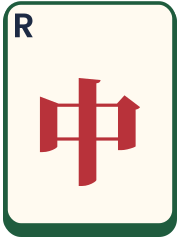
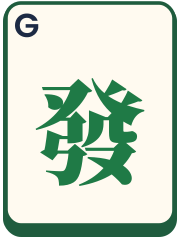
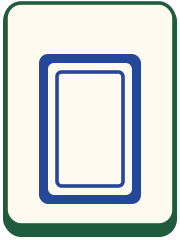
This hand uses a special shape rather than four melds and a pair. The example above wins with a pair of East winds; any of the 13 required tiles could form the pair.
Score: the limit of 13 faan in this example ruleset.
Test your scoring
Try three pattern questions, two bonus questions, and two total questions, using this page’s sample rules. Each hand is complete. Pattern questions ask about its melds or tile composition; total questions include every scoring detail you need.
Ready to put the tiles and scoring patterns together?
Explore Practice