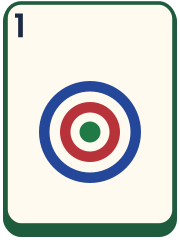
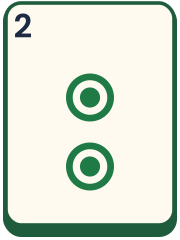
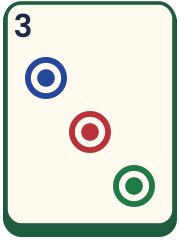
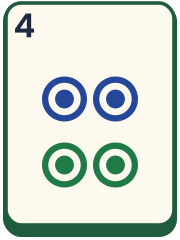
Dots
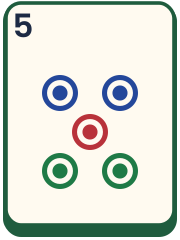
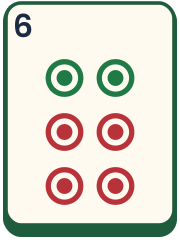
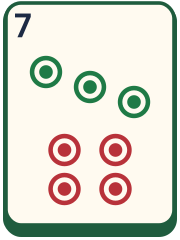
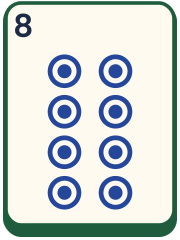
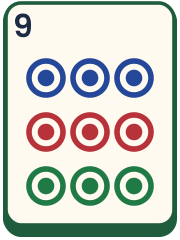
Also called circles. Count the circles to read the number.
Hong Kong Mahjong
Get to know the tiles, turn them into groups, and see how those groups come together in a winning hand.
A full Hong Kong Mahjong set has 144 tiles: 108 suited tiles, 28 honour tiles, and 8 bonus tiles. Without the optional flowers and seasons, the set has 136 tiles.
Each suit runs from 1 to 9, with four identical copies of each tile. That makes 36 tiles per suit. A 1 or 9 is a terminal; the numbers 2–8 are called simples.
Also called circles. Count the circles to read the number.
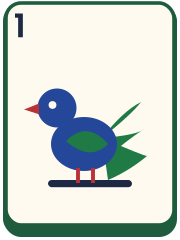
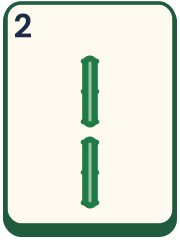
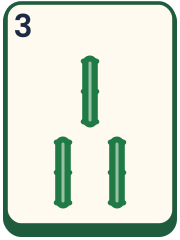
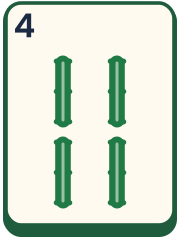
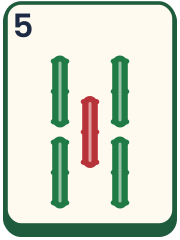
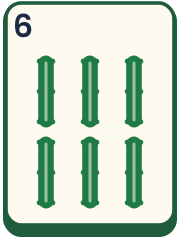
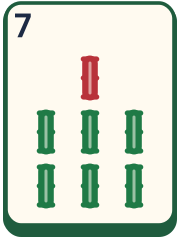
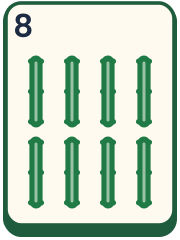
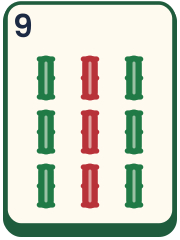
Also called bams. The 1 Bamboo is often a bird; the other tiles show bamboo sticks.
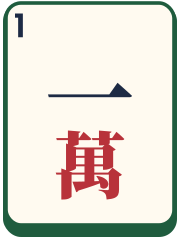
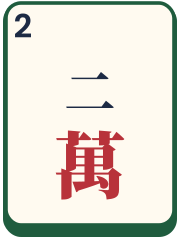
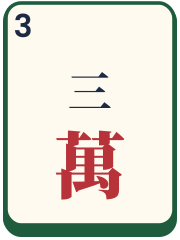
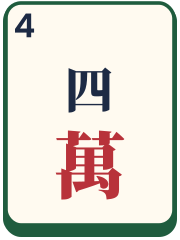
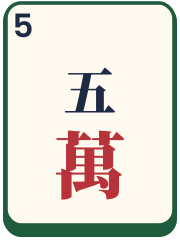
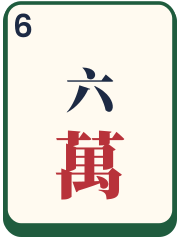
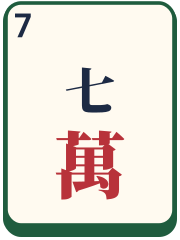
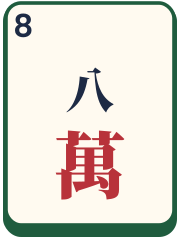
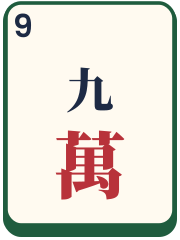
Also called cracks or wan. The upper Chinese numeral gives the rank; the lower character means ten thousand.
There are four copies of each honour. Honours have no numerical order, so they can form pairs, pongs, and kongs, but never a chow.
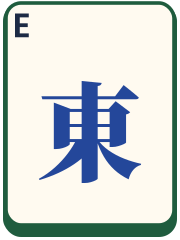
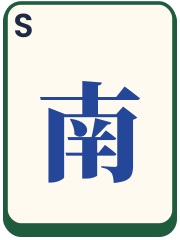
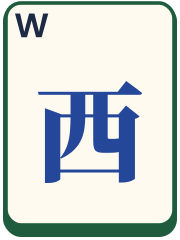
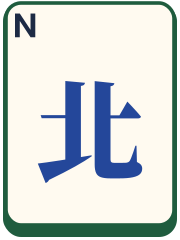
East, South, West, and North. Your seat wind and the round wind can matter for scoring.
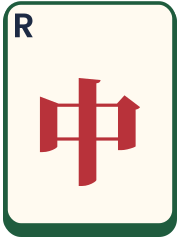
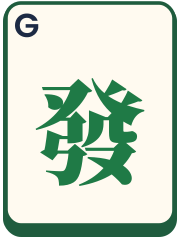
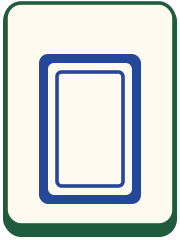
Red, Green, and White. The White dragon may look like an empty frame or a blank tile in other sets.
There is one of each bonus tile: four flowers and four seasons, each group numbered 1–4. In this artwork, flowers use red numbers and seasons use blue numbers.
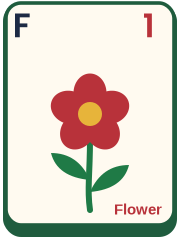
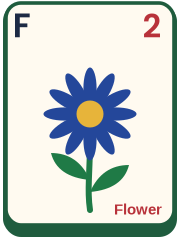
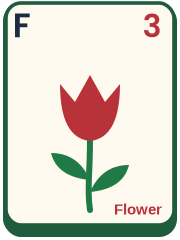
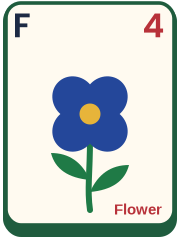
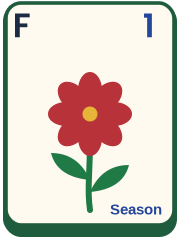
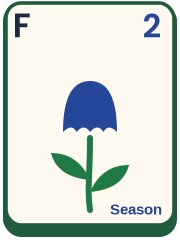
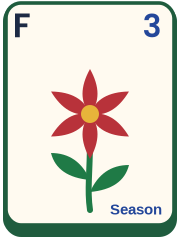
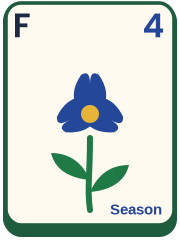
When you draw a flower or season, reveal it, set it aside, and draw a replacement from the back of the wall. Bonus tiles may add to your score, but do not form part of your melds or pair.
Try it yourself
Practise the tile families, then spot terminals and simples. These are types of suited tiles: terminals are 1 and 9; simples are 2–8.
A meld is a complete group: a chow, pong, or kong. A pair is the separate two-tile group that completes a standard hand.
3 consecutive tiles · same suit
Three numbers in a row, all in one suit: here, 3–4–5 Bamboo. You cannot mix suits, use honours, or wrap around from 9 to 1. To claim a discard for a chow, it must come from the player on your left.
3 identical tiles
Three copies of exactly the same tile. Also spelled pung. A pong can use suited tiles or honours. You may claim a discard from any player to complete one.
4 identical tiles
All four copies of one tile. A declared kong counts as one meld, just like a chow or pong. Draw a replacement from the back of the wall after declaring it. Four matching tiles in your hand only become a kong when declared.
2 identical tiles
Two copies of the same suited tile or honour. A standard winning hand needs one pair. You cannot claim a discard just to make a pair unless that tile completes your winning hand.
You can also build these groups with tiles you draw yourself. Claiming a discard reveals the group to the table; the group then stays together.
Try it yourself
Look at the tiles and choose the group they form. Mistakes are welcome: try again and learn the rule.
Which group do these tiles form?
The standard winning shape is four melds and one pair. The four melds can be any mix of chows, pongs, and kongs.
4 melds 1 pair
This example has two chows, two pongs, and a pair: 14 tiles in total.
Four groups of three plus a pair gives 3 + 3 + 3 + 3 + 2 = 14. You normally have 13 tiles between turns, then draw or claim the final tile to complete the hand. Each declared kong adds one extra physical tile, so a hand with one kong has 15 tiles. Flowers and seasons are counted separately.
A complete shape must also meet your table’s minimum faan requirement, often 3 in Hong Kong Mahjong. Agree on the scoring rules before playing. Special hands, such as Thirteen Orphans, use a different shape and are covered separately.
Try it yourself
Each hand has 13 tiles. Select the tile that fills the gap to complete four melds and a pair: first a chow, then a pong, then a pair. Practise the hand shape here; scoring is covered separately.
You know the tiles and the standard hand shape. Next, get the table ready and learn about seat and round winds.
Explore SetupRules reference: MyMahjong’s Hong Kong Mahjong basics. House rules can vary.